Artificial intelligence is a strong topic worldwide. It writes codes, generates images, and searches for data. Nevertheless, how can AI help in more “traditional” fields like manufacturing and maintenance? We summarized the facts for you in a short overview.
Corporate data analysis
Data collection and evaluation are key factors for improving efficiency of service and manufacturing. And here comes into play the industrial AI, such as the Edmund AI platform, that can work with a vast amount of information. It utilizes the data to create reports, find out the most likely cause of a machine fault, and even advise your technician how to repair it.
Wondering where to get the data inputs? You can start with your knowledge base, technical documentation, or data from the PLC systems of your machines. And if you currently have the information only in paper form, we recommend digitizing it first so you can use it efficiently.
Tip! Digitize documents faster with the Lumnio system.
And how does AI use the obtained data? It is platform-specific. For instance, Edmund downloads your device’s last operation data when instructed and scans it for abnormalities (e.g., information about recent overheating) with the help of your technical documentation. If it detects something noteworthy, it alerts you about the problem and suggests following steps.
Fault diagnostics and repair suggestions
If your machine is already down, AI can help you detect what is wrong faster.
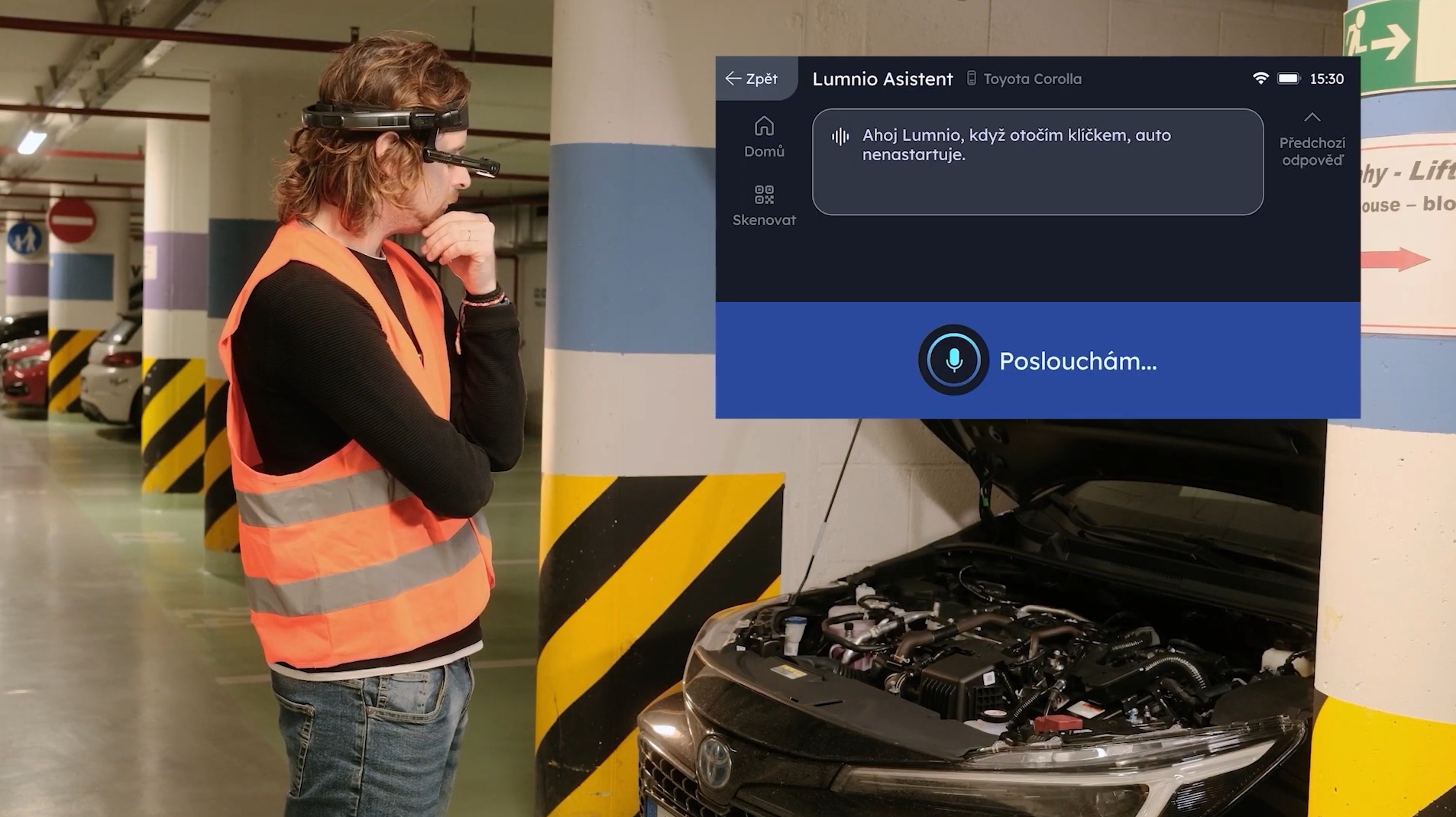
How? By promptly evaluating available data from your company. For example, when your technician asks Lumnio AI Assistant about a current problem with a device, Lumnio analyzes your tech documentation, work instructions, and the device’s service history to determine the likely cause of the fault. Therefore, the diagnostics take way less time.
But the AI doesn’t stop here. It can even suggest your technician a suitable fix, e.g., it recommends him using a workflow from your knowledge base applicable for this type of situation.
Tip! To get even better results, you can connect your AI to other data sources. For instance, Lumnio AI Assistant can be paired with the aforementioned Edmund platform and evaluate also the current data from your devices‘ PLC systems.
Quicker creation of manuals
AI can help you even in other areas, such as employee training and field support. E.g., Lumnio AI functions allow you to create work instructions for your technicians up to 5 times faster compared to manual creation of the materials. As a result, capturing and sharing know-how are more efficient. And your technicians can easily display the materials via a tablet or smart glasses.
Are you interested in tech news? Check also the top 5 digitization tools for manufacturing and maintenance.